Application development
for KoenigFinance
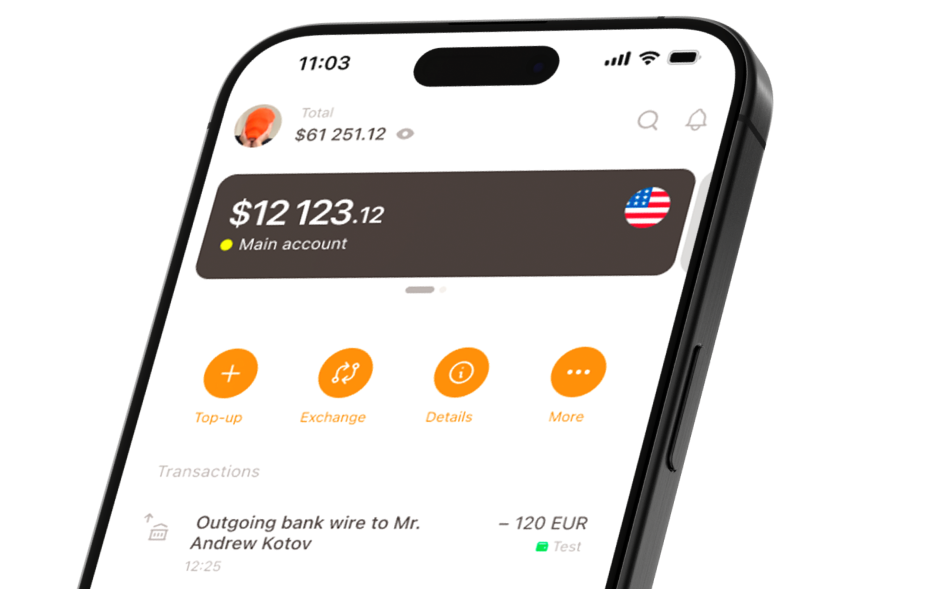
We developed a mobile application for banks using KoenigFinance software and successfully integrated it for existing clients
Background
The KoenigFinance team has been developing software for banks for over 10 years. We faced the task of developing a mobile application scalable to the needs of clients.
In the first year, we developed a Demo to showcase the software's capabilities so that banks could familiarize themselves with the mobile application implementation option. In subsequent years and up to the present day, we have been optimizing and refining new functionality based on the requests of client banks.
Let’s dive into the details:
Developed an architecture that allows delivering the product and providing technical support for it
1
Implemented KYC capabilities
2
Implemented a system for conducting transactions, as well as their analytics and accounting in the app
3
Developed and integrated functionality for individuals
4
Developed and integrated functionality for legal entities
5
Integrated the ability to pay for third-party services
6
Added interactive maps of bank branches and ATMs
7
Implemented the ability to communicate with the bank support team
8
Developed an income and expense analysis system
9
"We faced a responsible task to create a secure yet modern application, as it subsequently had to meet all the requirements of European central banks."
Arthur, CPO
Summary
The KoenigFinance mobile application improved company sales and succeeded in attracting new clients. At the moment, we have successfully passed all checks by the central banks of Moldova, Serbia, and Lithuania.
Development
Client-server interaction
The mobile banking development was carried out by two development teams. Our partners, the KoenigTech team, handled the development of the server software and the browser client application. Since KoenigTech only has experience in Web development, we were invited as mobile development specialists.
The complexity of the interaction lies in the fact that data from the server software side was sent in a format that wasn't the most convenient for mobile application development.
Thanks to our experience in interacting with third-party services, our development team built a unique architecture that allowed for more convenient interaction with the server, prevented data-related errors, and enabled us to quickly restructure and add features required by the user
Localization
The KoenigTech team developed a solution for localizing the browser application, which was then to be implemented into the mobile version as well.
Usually, application localization is "hardcoded" directly into the app code, and to make adjustments to translations, a new version of the app must be released to the Apple AppStore and Google Play.
We developed a localization tool from scratch that is capable of editing localization for both the browser and mobile versions of the application "live," without requiring the user to reload the app
Elasticity for any business
The KoenigFinance project is a massive set of various services and features designed for implementation into the pre-existing business of the banking sector.
The task during its creation was to make a core product that could be implemented into clients' businesses in the shortest possible time, with all the specific design details and service packages, while ensuring that client applications would also update when core features were updated.
We developed a "multi-package" application architecture, in which the source code is broken down into several different packages:
— core code that does not change for the client,
— pre-developed features that can be toggled on and off depending on the client,
— exclusive features required by the business,
— a design package that is redesigned depending on the client's branding
Development tools
We keep our finger on the pulse and use modern, convenient technological solutions supported by the developer community.
At the beginning of the project, we chose "GetX", one of the popular state management tools at the time, which subsequently stopped being supported by its authors. Lack of support is unsafe: libraries must be constantly updated to maintain compatibility with the platform and eliminate vulnerabilities.
Due to the way we build our application architecture, we were able to quickly and painlessly transition away from this fundamental tool in favor of a new and more convenient state manager, "Riverpod"
Fill out the form — we will contact you to discuss your project
By filling out the form, I accept the terms of the personal data processing policy and consent to their processing
Or contact us by phone
